
The definition of business growth has undergone a radical transformation over the past few years. In the traditional economic model, growth was often viewed as a linear progression—a steady increase in customers and revenue achieved through consistent, repetitive advertising. However, as we navigate the digital-first landscape of 2026, growth has become non-linear and high-velocity. It is no longer enough to simply “be present” in the market; businesses must now master the art of “Growth Marketing,” a data-driven approach that integrates product development, engineering, and creative storytelling into a single, unified engine.
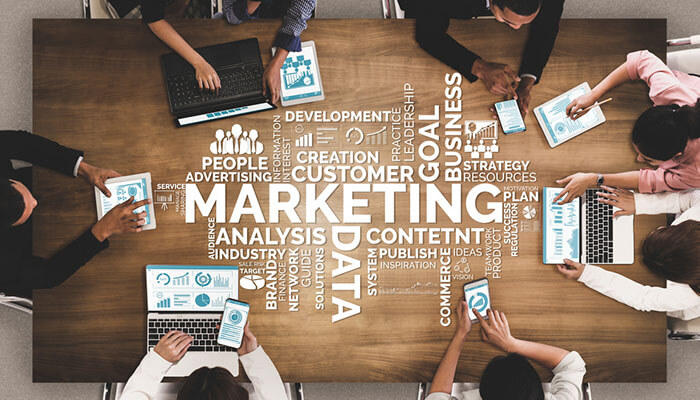
For the modern enterprise, marketing is no longer a cost center; it is a primary driver of scalable value. Achieving sustainable growth requires a deep understanding of the “Growth Loop,” a cycle where each new customer helps acquire the next. This article explores the essential strategies for driving business marketing growth, focusing on the integration of artificial intelligence, the power of community-led expansion, and the critical importance of retention-first thinking.
The Shift from Funnels to Growth Loops
For decades, marketers relied on the “Marketing Funnel” (Awareness, Interest, Desire, Action). While the funnel remains a useful visualization, it is inherently leaky. You pour money into the top, and a small percentage of value drips out the bottom. In 2026, the most successful companies have replaced the funnel with “Growth Loops.”
A growth loop is a closed system where the output of one cycle becomes the input for the next. For example, a user joins a platform, completes an action that creates value (like sharing a piece of content or inviting a collaborator), and that action naturally draws in new users. This creates a compounding effect where growth becomes organic and self-sustaining. To trigger these loops, marketing must be “baked into” the product experience itself. When your marketing growth is driven by the product’s inherent value, your acquisition costs drop significantly while your scalability sky-rockets.
AI-Driven Hyper-Personalization and Predictive Analytics
In the current era, “mass marketing” is increasingly ineffective. Consumers are bombarded with thousands of messages daily, and they have developed a sophisticated “filter” for generic content. Growth in 2026 is driven by hyper-personalization, powered by advanced artificial intelligence.
Modern marketing growth engines use predictive analytics to understand not just what a customer bought in the past, but what they are likely to need in the future. By analyzing thousands of data points—ranging from browsing behavior and social sentiment to micro-interactions on a website—AI can deliver the right message at exactly the right “micro-moment.” This level of precision reduces friction in the buyer’s journey and significantly increases conversion rates. However, the key to success here is “Human-Centric AI.” The goal is not to sound like a machine, but to use machine intelligence to make the brand feel more human, attentive, and relevant to the individual.
Community-Led Growth: The New Trust Economy
As the digital world becomes more crowded, trust has become the most valuable currency. Traditional celebrity endorsements have lost their luster, replaced by the power of “Community-Led Growth.” This strategy focuses on building a dedicated ecosystem of advocates, power users, and fans who feel a sense of ownership over the brand.
Associated entrepreneurs and business leaders are now investing heavily in “niche communities” rather than broad audiences. By fostering a space where customers can interact with each other and with the brand’s leadership, companies create a “Moat” that competitors cannot easily cross. A community-led approach drives growth through high-quality word-of-mouth and deep customer loyalty. In 2026, your most effective marketing team isn’t on your payroll; they are your most passionate customers who share their successes and provide “social proof” to the rest of the world.
Retention as the Ultimate Growth Lever
One of the most common mistakes in business marketing is over-focusing on acquisition while neglecting retention. In reality, retention is the foundation of growth. It is significantly more expensive to acquire a new customer than it is to retain an existing one. Furthermore, a high “churn rate” acts as a hole in your growth bucket—no matter how much water you pour in, the bucket never stays full.
A “Retention-First” marketing strategy focuses on the post-purchase experience. This includes personalized onboarding, proactive customer success interventions, and “Surprise and Delight” campaigns. By increasing the Lifetime Value (LTV) of a customer, you can afford to spend more on acquisition, allowing you to out-compete rivals in crowded advertising auctions. Growth is not just about bringing people in; it is about keeping them there and turning them into long-term partners in your brand’s journey.
Data Integrity and the Privacy-First Growth Model
In 2026, marketing growth is tethered to data privacy. With the implementation of global “Zero-Knowledge” protocols and stricter digital laws, businesses can no longer rely on intrusive third-party tracking. The new growth model is built on “First-Party Data”—information that customers willingly share in exchange for genuine value.
Building a “First-Party Data Asset” is a strategic necessity. This involves creating high-value content, interactive tools, or specialized newsletters that encourage users to engage directly with the brand. When a customer trusts you with their data, you gain a competitive advantage that cannot be bought on an ad exchange. This “Privacy-First” approach builds long-term brand equity and ensures that your growth engine is resilient to changes in platform algorithms or international regulations.
Conclusion
Business marketing growth in 2026 is a sophisticated discipline that blends data science with human psychology. It is no longer a game of “who has the largest budget,” but rather “who has the most efficient loop.” By moving away from leaky funnels, embracing the precision of AI, fostering genuine communities, and prioritizing customer retention, you can build a growth engine that is both powerful and sustainable.
The companies that thrive in this era are those that view marketing as a continuous process of experimentation and optimization. Growth is not a destination; it is a state of constant motion. By staying agile, respecting the privacy of your audience, and delivering consistent value at every touchpoint, you ensure that your business does not just grow, but flourishes in an ever-evolving global marketplace. Velocity is the goal, but value is the fuel that makes it possible.